Wednesday, July 21, 2010

South Africa's Higher Education System: Reaching a Crossroads?

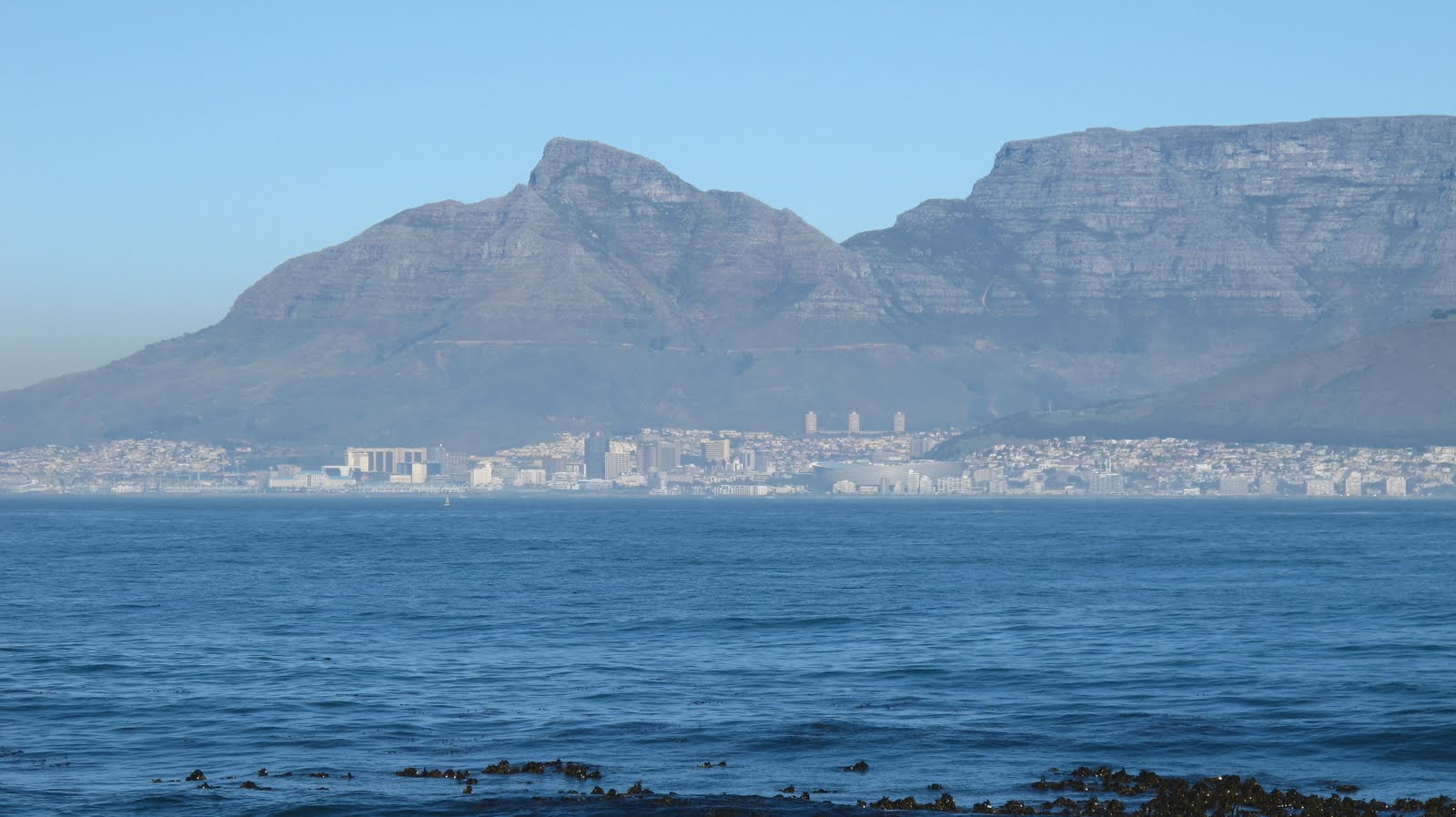
Earlier in the week, after visiting the University of the Western Cape (UWC), I observed that the themes from the presentations about the state of South African higher education we heard at the university were surprisingly similar to those we hear in the U.S. (see 7/19 posting) Today, we visited the University of Cape Town (UCT), which according to most sources is the top ranked university in South Africa (http://www.4icu.org/topAfrica/). (To the right is a photo of UCT I downloaded from the internet, to the right.) Regardless of whether it is indeed the #1 or #2 institution in the country, UCT’s market position in South African higher education is the equivalent of that of the Ivies in the U.S., certainly in terms of prestige and reputation. Perhaps UCT is at the top based on the quality of its educational offerings and the outcomes of its graduates…that’s a debate and argument for someone else to tackle.


We were treated to about a half dozen presentations during the visit, with presenters and their subject matter varying. We heard from academic officers and faculty members who commented on the state of higher education in South Africa and UCT’s service learning organization, to other administrators who discussed UCT’s efforts in fundraising and development and what the institution is doing to combat the HIV/AIDS epidemic that plagues the country’s people.

There were numerous differences between our visit to UWC and to UCT, including the curb appeal of the campus, the interior finishes of the buildings (at least of those we saw), the perceived progress being made by each institution towards realizing the higher education improvements in post-Apartheid South Africa that are so desperately needed, and the experience and expertise of the faculty and administration. In all of these areas, at least in the opinion of most of us who visited, UCT comes out clearly on top. A word of caution… at neither institution were we presented with enough data or exposed to enough of the people (including students, of which we heard from/spoke to none) and the place to make a truly informed decision about each institution. But if I were forced to choose the more advanced institution, it would easily be UCT at this point.

The aforementioned differences aside, there also were some similarities in the visits. First, I observed a sense of restlessness and recognition at both campuses that all is not well in the country’s higher education environment, even though they have been working on improvements at least since 1994 when Nelson Mandela was elected president. Also at both campuses, we were provided with noticeably scant information about each institution’s individual statistics and issues; they clearly focused more on national data and issues. Based on what we heard, some common themes regarding higher education in South Africa emerged for me at both institutions:
  • With the new South African Constitution that was developed under Mandela’s leadership, improving education and higher education for all South Africans is a priority goal
  • Since 1994, numerous, in fact many, many policies have been developed whose desired outcomes would make noticeable and significant improvements towards the nation’s education goals 
  • While increases in overall enrollment and in participation rates among non-Whites have improved, the magnitude of those improvements is minimal (e.g., Black enrollments as a percentage of the total have improved from something like 5% to 7% since 2000); the same can be said for completion rates 
  • Because the level of improvements has been so minimal, versus the desired outcomes that are rooted in all of the education policies that have been adopted, the country is at a point of not quite being sure what to do next to make more rapid and considerable progress.
These common themes are absolutely limited in scale and scope and are literally based on what I’ve heard during the two campus visits. However, with these caveats, I fear that the South African government, its policy makers and influencers, and its higher education community may need to shift its collective focus if the country is to have any chance of achieving its vision for a more equitably and competently educated populace.

This blog, and particularly this posting because of its already cumbersome length and the lateness of the hour, is not the place for me to offer solutions. But I do have some thoughts percolating in my mind, and I am thinking a post-trip posting may be a more appropriate spot. Perhaps you have some thoughts?

As for me, I’ll have experienced Johannesburg by then, and hopefully I’ll be caught back up in sleep so as to be thinking with a clear, rested mind. For now, it’s time to call it a night. We’ve got a 4:50am wake up call to catch our flight to Johannesburg. In addition to the travel and getting settled at our hotel, the agenda for tomorrow includes a visit to the Apartheid museum. I am suspecting the opening of my mind to the South African peoples’ history and experiences is about to widen and intensify. I’ll let you know.


Tuesday, July 20, 2010

Oceans, Penguins, and African Dancing Equal a Full Day

It turns out that the waters of the Indian and Atlantic Oceans actually meet off the point of Cape Agulhas, which is about 90 miles south and east of the Cape of Good Hope. I’m relieved to have learned that today while visiting the Cape of Good Hope, because I was stressed that I had not dipped my toe into the chilly waters in anticipation of touching two oceans. Alas, that is the only lowlight from another day of jaw-dropping beauty and experiences.


The visit to the Cape was spectacular, as the scenery driving to and from and while there was amazing. Among the creatures we saw were wild ostriches, baboons, elands and grysboks (two types of antelopes), and dassies (think of a rabbit, minus the long ears). In addition, we were very fortunate to see a bryde’s whale frolicking maybe 500 yards off the coast. According to our tour guide, the 8 previous Penn cohorts that came to South Africa did not see any whales. The climb from the base parking area to the peak where the now retired light house stands was exhilarating—regarding the light house, it turns out that having it located high above the ocean (about 750 feet above sea level) often hid it in clouds and fog, rendering it useless in aiding ships. So one was built on a promontory, less than 300 feet above sea level, and continues to provide assistance in the stormy area. Speaking of storms, it was yet another stormless day for us, with sunshine all day and temperatures again reaching the upper 60s. I’m including two pictures from the Cape visit. The first, to the right, is of our entire group posing at the Cape of Good Hope sign. The second, to the left, is one that was taken of my family, looking out into the ocean waters at the base of the original Cape Point lighthouse. To learn more about the Cape of Good Hope, visit http://www.capepoint.co.za/.
Our next stop was a brief visit with the African Penguins at Boulder’s Beach (http://www.aboutcapetown.com/penguins.htm). The penguin colony at Boulder’s only dates back to 1983, when two penguins were spotted. Since then, as a result of mating and migration from some of Africa’s other penguin colonies, the penguin population at Boulder's has grown to nearly 2,500! The kids on the trip (as well as the adults, including this one) really enjoyed this stop. Watching penguins waddle brings a smile to the face!

For lunch, we visited the Lourensford Winery (http://www.lourensford.co.za/), which we were told is the only black-owned and managed winery in South Africa. We enjoyed a wine tasting, and overview of the winery and wine making process, and a wonderful lunch outdoors in the warm sunshine.

The afternoon was spent touring more of the Cape area, with a stop in the Stellenbosch, South Africa’s oldest town and home of Stellenbosch University (http://www.sun.ac.za/index.asp), one of the Apartheid era’s Afrikaner institutions. The town is heavily Dutch-influenced, noticeably in its architecture. The town was attractive and there were numerous quaint shops and boutiques in which to browse.

For dinner, we visited the Moyo restaurant on the grounds of the Spier winery (http://www.spier.co.za/whattodoatspier/moyo.htm). What a treat! The setting is one of Spier’s gardens, and tents are set up throughout, with seating areas and warming fires interspersed with gardens and water features. I am simply not doing the setting justice, but I notice on the Moyo web site it mentions the experience comes across as though you are in a nomadic African village. The food and meal experience is what I’d call a combination of family style and buffet, but with the quality, variety, and authenticity of the food being more 5-star than what we typically think of with buffets. In addition, there was live entertainment with African dancing and singing, which I captured in the picture to the right.

Another jam-packed, memory-filled day has come to a close. Amazing sights and sounds, food and experiences, which seem to be the daily occurrence. The professor from Penn who teaches our History of South African Higher Education course and leads the trip shared with us that she intentionally mixes the days with some being focused specifically on higher education issues and experiences, some with the natural beauty of the country, and some with firsthand exposure to the past history and current issues facing South Africa. Each, in its own way, elicits incredibly strong emotions, so her strategy makes sense to me in mixing things up. Tomorrow, we’re off to the University of Cape Town as we spend or final day in the area before flying north to Johannesburg early Thursday morning.

It’s nearly 1am. I’m exhausted, but with an equal dose of anticipation in looking forward to sharing more tomorrow.

Monday, July 19, 2010

Learning More About South African Higher Education, Past and Present

Yesterday, we had our first dose of South Africa’s amazing natural beauty, and we got a taste of the injustices that occurred during the Apartheid era in the country. Today, our focus turned to higher education with a visit to the University of the Western Cape (http://www.uwc.ac.za/). UWC was established in 1959 for “Coloured” people. The term Coloured in South Africa has different meaning than how it has been used in the U.S., and to understand it requires some knowledge of the legalized racial sorting that occurred via Apartheid in South Africa. Admittedly, I am no expert in this subject area, but as an attempt at describing it most simply, the National Party that ruled South Africa from 1948 until the Nelson Mandela era began in 1994 used race as a means of empowering and disempowering certain groups of people according to their skin color and racial descent. Whites were at the top of the privilege scale, Indians next, Coloureds third, and Blacks were treated as most inferior. The racial categories were legally defined and interpreted during Apartheid. To learn more, visit http://www.africanaencyclopedia.com/apartheid/apartheid.html.

UWC was designated for the Coloured's, and as a result, the resources allocated to the institution and the quality and limits of the education offered to its students lagged far behind those for the Whites and Indians and only surpassed those for Blacks. Today, 16 years after Apartheid legally ended, the institution continues to serve a student body that almost entirely comes from Coloured or Black backgrounds. During our visit, we had several faculty members and administrators present to us about the institution as well as about higher education in the country.

As I listened to the presentations and their formal as well as informal remarks, I was struck by the similarities between the challenges facing South African higher education and those faced by our own postsecondary system. Without a doubt, the severity of the challenges and shortcomings are on a much larger scale than in the U.S., but nonetheless, had I closed my eyes and forgotten about my whereabouts, I could have been listening to a discussion back home. For example, South Africa is faced with appalling participation and completion rates that were proliferated during Apartheid. Today, only 17% of South Africa’s 48 million population is enrolled in higher education, and in my opinion even more concerning is that only 16% of those who enroll in higher education graduate. By contrast, in the U.S., the college participation rate is currently at more than 50% with some type of degree or enrolled in college and the national completion rates for 2008, according to http://www.higheredinfo.org/, were 56% for bachelor’s degrees and 28% for associate’s degrees. Indeed, we have legitimate and serious needs to increase our nation’s participation and completion rates, but in South Africa, they are frighteningly low. Of course, we need to remember that South Africa is only 16 years into a democracy, so we have a bit of a head start in making educational opportunities available to all of our citizens.

One of the presenters also talked about the tensions that exist in South African higher education between accountability and academic freedom. Here too there is a parallel between South Africa’s higher education environment and that of the U.S. I am starting to understand with more clarity why Penn chooses to bring us to South Africa to learn about its higher education system. On Wednesday, we will be visiting University of Cape Town, which was originally chartered to serve the White population during Apartheid, and today is perhaps the most prestigious university in the country. I’m looking forward to how it compares with UWC.

Tomorrow brings another day of exploration in the Cape Town area, including a trip to Cape Point, with a stop on the way to view a colony of African penguins. Cape Point, also referred to as the Cape of Good Hope, is the southwestern most point in Africa, off the coast of which the Atlantic and Indian oceans meet. For any scientists (or oceanographers or those who are just more educated in their ocean knowledge), if I put my foot in the water off of Cape Point, will I be able to say I touched both the Atlantic and Indian oceans simultaneously?

Until tomorrow,

Marc

Sunday, July 18, 2010

Nature's Beauty vs. Humankind's Scars

Greetings from South Africa. After catching up on some sleep, we awoke to an absolutely stunning winter morning that led to an incredible day in Cape Town—yes, it is winter here in South Africa. Today was a particularly special day in all of South Africa, as Nelson Mandela celebrated his 92nd birthday. Festivals were scheduled in many of the country’s cities, and we heard many times that when asked what he wanted for his birthday, Mandela stated that rather than any personal gifts, he wanted all of South Africa’s citizens to give 67 minutes of their time to a worthy cause today in recognition of the number of years he has been involved in politics on behalf of the South African people.

As we boarded our bus to head out for the day’s sights, the skies were bright blue and the temperature in the mid 40s with the cold sea air noticeable. The morning chill in the air turned to warm breezes as the day grew older, and by mid-afternoon, the bright sunshine and the upper 60s temperatures were perfect. This contrast between the chilled morning air and the warming afternoon breezes was a harbinger of the day’s experiences.

We began by visiting Table Mountain, a flat-topped peak that rises 3,500 feet above Cape Town and serves as part of a spectacular backdrop for the city. (Left: The leg-weakening views from the summit of Table Mountain looking down at Cape Town.) South Africa legend has it that a pirate in the early 18th century retired from his life at sea to live on one of the neighboring peaks to Table Mountain, and all day long he would sit on the mountain and smoke his pipe. One day, a man approached the pirate and challenged him to a smoking contest, and their battle lasted for several days until the pirate won. The man who was defeated revealed himself to be the Devil, and the two allegedly disappeared in a puff of smoke. In the centuries since and continuing today, it is common for Table Mountain to be covered on summer mornings by a shroud of clouds (the “table cloth”), that slowly work their way down the mountain as the daylight sun heats them. On this winter morning, the table cloth never made an appearance and the views of Cape Town, Table Bay, Robben Island, and the other mountains were incredible. To learn more about Table Mountain, visit http://www.cape-town.info/cape-town-attractions/table-mountain/.

As we departed Table Mountain, little did any of us know what we were in for in the two remaining primary stops in the day’s itinerary. We proceeded down into Cape Town, headed for the District 6 Museum. The Museum is a powerful exhibit that memorializes the District 6 municipal area of Cape Town. During the Apartheid years, more than 60,000 residents of the District were forced out of their homes, which were bulldozed, to go and live in makeshift communities that were based on skin color and race. Our guide at the museum is a District 6 survivor, and his stories of his and so many others’ lived experiences left us speechless and just plain saddened. Yet for all of his and others’ suffering, his outlook towards that terrible time in South Africa’s history was amazingly positive, and on many occasions he talked of the power of reconciliation. (Right: My children, Katie and Ryan, were fortunate enough to meet and pose with Noor, our tourguide who lived in District 6.) We left the museum with new awareness of this example of humankind’s flaws. To learn more about District 6 and the museum, visit http://www.districtsix.co.za/frames.htm.

After having lunch on the waterfront in Cape Town, we boarded a ferry for the 20 minute ride across Table Bay to Robben Island. Almost 8 miles out from Cape Town, Robben Island offers stunning views looking back towards Cape Town and its surrounding mountains, including Table Mountain. (Left: The beautiful but sad views experienced by Robben Island's prisoners, looking back across the bay at Cape Town.) That view, unfortunately, is one that thousands of prisoners and societal outcasts were forced to see during their incarcerations in the island’s prisons. Nelson Mandela spent nearly half of his imprisonment at Robben Island, and our guide, himself a former prisoner at Robben Island, brought us to view Mandela’s 8’ x 8’ cell. To learn more about Robben Island, visit http://www.cape-town.info/cape-town-attractions/robben-island/.

We saw some of Cape Town’s real beauty today, and we saw and learned about some of its unfortunate past. I have a feeling today’s experiences, with the range of emotions they brought on, are going to be a consistent element of the days ahead. We’re here to learn, and when we consider history, we must learn from the bad as well as the good. I’m already looking forward to learning more tomorrow, as we visit our first South African university. I’ll look forward to sharing more, tomorrow night.

Marc

Saturday, July 17, 2010

Arrived in Cape Town

Wow, that was a long day's (and night's) journey getting to Cape Town. We left JFK about a half hour late, at 11:45am Friday, and arrived in Cape Town at about 1:30pm local time (7:30am EST). Fourteen and a half hours on the flight from JFK to Johannesburg, a three hour layover there, and then 2 1/2 hours down to Cape Town. I realize there are many who travel at least this far and with more frequency than me, but that amount of time in the air is a bit rough. It seemed as though the vast majority of us on the trip were only able to grab short periods of sleep. Whether it was the excitement about the trip, or the discomfort that comes with squeezing into the coach class seats, it robbed us of meaningful sleep. So by the time we arrived at our hotel in Cape Town around 3pm, everyone scattered and disappeared to their rooms. Tomorrow we start with a day of sightseeing around Cape Town, including a ferry ride to Robben Island, the infamous island where Nelson Mandela spent the better part of 30 years imprisoned in a 10x10 cell during the last years of the Apartheid regime.

I'm exhausted and fighting to keep my eyes open, so I'm keeping this short for today's post. I will say, however, that the approach into Cape Town was simply striking in its juxtaposition of the stunning natural beauty, with the rocky mountains that frame the city and its sparkling ocean waters, and the first glimpses of the area's shanty towns as we neared the landing. I have a feeling we are in for an incredible learning experience, professionally and personally.

Good night.

Friday, July 16, 2010

It's Finally Here!

This is my initial posting, and anticipating I need to provide some context, I have a feeling it may be a bit long. So I apologize up front and promise to be less verbose in subsequent posts.

The big day is finally here. All of the cohort members, plus many family members, are gathered in the terminal at JFK, waiting to board our flight for South Africa. We’ve talked about this trip since the program began last August, and today the journey begins.

Nearly a year ago, 24 of us started in Penn’s executive doctorate program in higher education management. Penn uses a “cohort” model for the program, which in the simplest of terms means you do everything together… from the 10+ hour days in class in Philadelphia… to the group meals where we share good food, drink, and stories… to group therapy sessions in which you have 23 sympathetic friends willing to listen to your struggles with balancing the seemingly endless reading and writing assignments with your professional work responsibilities and in many cases, with family responsibilities. The point of the cohort is that you become close and serve as a support system for each other during the 22 months of the program and somehow pull each other through. Half way through the program, I’d say it seems to be working.

So why are we headed to South Africa? The program includes an international module—module is the term for the program’s “courses”—and for a number of years, they’ve gone to South Africa. The country’s higher education system has a history similar to that of the United States in that it once was very segregated and continues to face challenges with access and equity. Based on what we’ve heard from alumni of the program, the experience in South Africa is life-changing.

During the trip we’ll be visiting with a number of South African universities. In addition, we also will get to experience the culture, rich history, and the natural beauty of the country, which so many people around the world saw during the just completed World Cup.

What will add to the experience is that many family members are traveling with class members. As for me, I’m fortunate to have traveling with me my wife, Teri, and our two children, Katie (13) and Ryan (11). Teri and I were concerned about how costly it would be for the four of us to go, but in the end, we decided it truly was a once in a lifetime opportunity to experience a trip like this as a family. And Katie and Ryan are at least as excited about the trip as are Teri and I.

So as I’m sitting here at JFK, wondering about the experiences I’ll share over the next 10 days, I can’t help but think of the work week I just completed. Back in Baltimore, the ABC show Extreme Makeover: Home Edition is in town. To make a long story short, the new home is being built for the organization Boys Hope Girls Hope, a national non-profit organization that provides children who are at risk with a stable home, positive parenting, high-quality education, and other supports needed to reach their full potential, including guidance and mentoring to prepare for college. The program has a house for the eight boys who are part of the Baltimore program, but it did not have one for the seven girls in the program. Loyola got involved when we made a gift to the program, offering full ride scholarships to the eight boys—our neighboring institution, College of Notre Dame, offered the same awards to the girls. Yesterday I was fortunate enough to go down and tour the construction site. I had the chance to meet a couple of the Boys Hope boys, who found out about their scholarship offers earlier in the week, and the gratitude they extended in appreciation of Loyola’s gesture was moving. For these boys, their counterpart girls, and all of the Boys Hope Girls Hope students around the country, their chances of going to college are dramatically increased by participating in the program. Loyola’s decision to reach out to these students was easy, as it hits at the heart of our Jesuit mission and identity.

In the United States, we still have many children and adults who face extreme obstacles to get a college degree. But there are examples, such as Boy Hope Girl Hope, where progress is being made towards a more educated citizenry. As I get ready to board the flight to South Africa, I can’t help but wonder about the people I am going to meet, both young and old, and what obstacles they are facing in their lives. I guess I’ll find out soon enough.

It’s time to board. I’ll be in touch soon.

Marc